Showing posts with label Everyday things. Show all posts

Friday, April 18, 2014

How to give your diet an eco makeover this Earth Day


Six ways to give your diet an eco makeover this Earth Day
 

The new “eating well”; being deliberate about what food you buy, where your buy it, and then ensuring that you eat it all.


I consider Earth Day a celebration, a launch party for a new way of doing things. The annual event challenges Canadians to make changes to our day-to-day lives in ways that benefit the planet and if we want to take up that challenge, April 22 is the kickoff day.  

One of this year’s challenges is to give our kitchen tables an eco-makeover by making more sustainable food choices and wasting less. It’s a very green thing to do since where we buy our food, what we buy and what we do with our leftovers has such a big impact on the environment. Regional food security comes into play as well since we’re so dependent on food from faraway places.

So where to begin? Earth Day Canada presents six suggestions for what we can all start doing today to make a meaningful impact through our daily meals.

Monday, April 14, 2014

Why teaching kids to cook is so important


Over the March Break my husband and I met a woman who told us that when her kids were growing up each was responsible for preparing one evening meal a week for the whole family. They learned to cook by cooking and were completely capable in the kitchen even at the age of 12. She said it taught them an important kind of independence and a sense of responsibility.
As someone who happens to believe that cooking wholesome food from scratch is one of the most important things that you can do for your family, it’s probably no surprise that I’m particular about what I feed my kids. But it occurred to me that I’m putting a lot of effort into teaching my kids about good food, but I’m not teaching them how to prepare it.
Learning to cook is a life skill, and as parents our job is to teach kids to become independent. You can’t very well go out into the world if you don’t know how to feed yourself. Teaching our kids how to feed themselves well should be our goal. We want our kids to succeed in life, why should we lower our standards when it comes to food?

Tuesday, February 25, 2014

Green living lessons from the 2013 Christmas ice storm


How to use less water and electricity for a more eco-friendly home
The ice storm taught us that we can get by with less water and less electricity.
Challenging times have a way of teaching us life lessons. Although I wouldn’t wish another outage on anyone I’m happy to admit that I learned a lot during our two (half) days in the dark.

For most it was an exhausting reminder of our dependence on power, it exposed how self-sufficient we are (or aren’t) and proved how we can call get by with less.

Sunday, February 2, 2014

Wrap rage - how to reduce packaging for a more eco-friendly home

How to reduce packaging for a more eco-friendly home
Choosing products with less packaging is a way to support companies that are more eco-minded.

Have you ever experienced “wrap rage”, that feeling of extreme frustration when trying to open a new purchase that is secured in the Fort Knox of packaging? It isn’t limited to those of us challenged to open the packages on children’s toys, all manner of products, edible and otherwise are heavily packaged – over packaged some might say – and it takes a good pair of kitchen scissors and a dose of patience to open them.

Sunday, December 1, 2013

Shop outside the box for eco-friendly gift giving

shopping local for eco friendly gift giving
Supporting local, independent shops is an enjoyable way to keep your Christmas shopping eco friendly. 

Uptown Saint John has a great ad campaign running right now. It’s called “Shop outside the box” which I think is a clever way to remind people that they can find unique gifts for family and friends at a variety of independent retailers in uptown Saint John.

I prefer to support local businesses throughout our region during the Holiday shopping season. I find that shopping in small, local stores keeps the joy in Holiday shopping, making it a pleasurable event rather than a chore.

Personal preference aside, buying local keeps four-times more of our shopping dollars in our communities, compared to shopping at chain stores. It’s a way to invest in our community and to grow our economy.

Shopping “outside the box” can have an eco slant too.
Considering the environment when you’re choosing gifts is a way to lower the carbon footprint of the Holidays while giving meaningful gifts that can be put to good use.
Gift certificates:
We love to give gift certificates to Imperial Theatre, Harbour Station events, or local restaurants. It’s a nice way to treat the recipient to a night out. Or you can make a donation to a local charity in someone’s name.

If you prefer to give something that’s more wrap able here are a few more ideas, large and small, that are fun, practical and ecofriendly.

  • If you know someone who is a fan of good quality dark chocolate give them a stack of organic, fair trade chocolate bars wrapped with a pretty bow. This premium chocolate is pricier than your average bar so can be a sweet treat.

  • For the coffee lover – a pound of best quality coffee beans and a handmade mug makes a great gift. (Java Moose and Beamer’s Creek coffee is roasted locally, Just Us! Coffee is roasted in Nova Scotia).

  • A basket of specialty food is another unique gift that the recipient can put to good use, especially during the Holidays.  Markets and many specialty shops carry a great variety of gourmet products, homemade and otherwise. Or you could fill a basket with your own homemade treats.

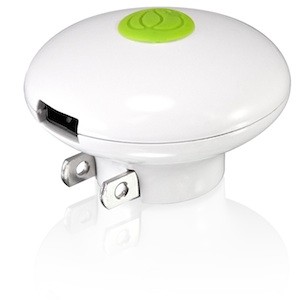
  • Almost everyone could use an eco-friendly electronics charger. The Green Zero charger uses zero stand-by power and shuts off the power supply to a device when it’s fully charged, so you don’t need to worry about wasting power when you recharge overnight.

  • Soda Stream is a simple home system for carbonating tap water. It's a countertop gadget with CO2 cartridges that are refillable (at Sears, Staples). Carbonate to your liking -- lots of bubbles or few -- and nix the cans and bottles of mineral water and club soda. (It takes about three litres of water to create one litre of bottled water and about 250 ml of oil -- includes oil used to make the bottle and gas to ship the filled bottle.)

Whatever gifts you choose to give, considering the impact your shopping can have on your community, and the environment, is another way to make your shopping, and the Holiday season, meaningful.

Wednesday, September 25, 2013

8 tips to improve indoor air quality


It used to be that cooking aromas made their way from the kitchen to our bedroom. It was kind of nice if I was baking molasses cookies but not so great if I cooked haddock for supper. I knew that inhaling cooking fumes wasn’t great so last winter we installed a new range hood that vents to the outside and now our bedroom just smells like our dog.
Cooking fumes are just one of the many issues with indoor air quality that most of us live with, without understanding the consequences.

Are new clothes toxic? 4 tips to avoid chemical residue

New clothes are coated with a variety of chemicals to keep them looking crisp.

Late August is likely one of the busiest clothes shopping times of the year. It’s a tradition in many households to get a pile of new back-to-school clothes and even people who aren’t heading to school get in the shopping mode as we approach a new season.
Before you dress your kids, and yourself, in your brand new, never-been-washed clothes, you might like to toss everything in the wash first. And then put them through the wash again. And then again.
Here’s why...

Green routine – 7 healthy habits for you and the planet

7 healthy habits for you and the planet:

September is a good time to start new habits. Because a sense of routine resumes after Labour Day you might be able to slide some healthy changes into your everyday routine without much trouble. If you’re open to this notion, here is a September checklist to consider:

Friday, August 16, 2013

Zero trash goal - know your local recycling guidelines


Recycling reminders - knowing what can and can't go in the recycling bin
You might be surprised what can and can't go in the recycling bin. Learn your local do's and don't so you're recycling everything possible.
The curbside recycling discussion has been on the table for a few years now in Rothesay but only recently have discussions turned to the idea of a regional curbside recycling strategy.

As the Fundy Solid Waste Commission contemplates a $4-million investment to replace the roadside blue bins it makes sense to see where municipalities in the region stand on curbside recycling programs.

Being able to put recyclables to the curb every two weeks should improve recycling participation, which has leveled off over the past couple of years.

Aim for zero curbside trash and you'll get pretty close

Recycling can cut your household trash nearly in half and composting can knock off another 40%. Curbside recycling can do wonders for recycling participation.

Tuesday, June 11, 2013

Eco-friendly fashion: second hand shopping can be cheap and chic


Fab second hand fashion finds
My second hand clothing finds: frills, cashmere and organic cotton.
Most people can’t resist a good deal, especially when it comes to clothing (me included). That’s what the business of cheap trendy clothes is feeding on. This “fast fashion” makes it easy for people, especially women, to feed their addiction to stylish clothing as each new season approaches. This habit, or hobby, or whatever you want to call it, isn’t sustainable, for ethical and environmental reasons.

The tragedy of the clothing factory collapse in Bangladesh reminded the Western world that the appetite for fast fashion has a cost that isn’t coming out of the shopper’s pocket, that there are ethical issues associated with producing ultra-cheap clothes in up-to-the-minute styles.

Sunday, March 24, 2013

Six super-easy homemade cleaners that smell great and work


easy recipes for non toxic cleaning using simple grocery store ingredients

Like most people I love that “clean” smell of a freshly scrubbed house. It’s like having your nose confirm that the place is sparkling, no matter that it’s usually synthetic fragrances (found in standard cleaners) that linger in your home.
Fragrances contain phthalates, which are a batch of chemicals known to be hormone disruptors and suspected of causing a whole host of health concerns, including asthma, reproductive issues and thyroid problems. As always, children are most at risk. If an ingredient list includes the words “fragrance” or “perfume”  know the scent is toxic. Even unscented products often contain these ingredients.

Wednesday, February 27, 2013

How to reduce vampire power consumption

Eco-friendly chargers use zero stand-by power and shut off the power supply when your device is fully charged
Eco-friendly chargers use zero stand-by power and shut off the power supply to a device when it’s fully charged,

Would you ever leave the door ajar in winter, or leave the tap running in the bathroom?
Probably not. 
Nobody wants to waste water or heat. But what we all do without thinking is let our electronics sip away on power while they’re not being used.
Computers, TV’s, DVD players, stereos, your cable box, all suck power when they not in use (off or on standby) powering clocks and other display screens. Microwaves and other small appliances do the same and even our cell phone chargers keep drawing electricity long after our devices are fully charged.  

Monday, February 11, 2013

Are sales receipts toxic? 7 tips to reduce your BPA exposure

7 tips to reduce your BPA exposure from sales receipts
Many sales receipts in Europe are stamped "BPA free" so consumers don't have to worry.

My son came home from school last fall with a new “5-second rule”.
When he saw me sorting receipts from my purse I was told not to touch them for more than five seconds because they’re toxic. That was the buzz at school. Like holding your breath when you drive by a graveyard and honking when you go over a bridge.
But the thing is, the receipt rule is based on fact.

It seems that the thermal paper used for most receipts these days is coated in Bisphenol-A (BPA), an environmental toxin that is a known hormone disruptor and has been linked to reproductive problems and some cancers.

Friday, January 25, 2013

Greening your ride - more eco-friendly transportation


My husband is a huge fan of the Comex. Aside from the fact that it keeps us a one-car family he gets to relax and read his book on the way to the office. The added bonus, it keeps our family`s carbon footprint low.  
 

Transportation is the single largest source of greenhouse gas emissions and air pollution, and among all modes of transportation cars are the worst offenders. According to Saint John Transit, a single public bus takes 40 vehicles off the road during rush hour, reducing air pollutants by nine tones a year.


Taking your car off the road as often as possible has other benefits too. Think of what you’d save on gas, insurance and parking expenses. 

Friday, December 28, 2012

Green resolutions - 7 tips for a more eco-friendly life


January first is an easy day to start anew. There’s something about rolling into a new year that inspires us to do something to improve ourselves.

But what it we all viewed January first as an opportunity to make our world a better place?


Making a few eco-friendly changes to the way we live is one way to improve the world with the added benefit of improving our lives since the health of the planet and our personal health are so undeniably intertwined. Something as simple as buying better quality food, or eating a little less meat, can have positive repercussions that extend way beyond your waistline.

As with any new resolution or habit, starting with bite-sized changes and adding to them bit by bit is a good way to build positive momentum. Here are a few ideas to get you started.

Thursday, November 1, 2012

Make your home more energy efficient & stay warm this winter

Visit Efficiency NB for tips on ways to keep your home cozy and save money, including rebate programs.
Every fall when the temperature dips and the house starts to feel a little chilly we start to think about new ways to keep our house cozy. We don’t want to spend more than necessary to stay warm, and we don’t want to waste energy. Heating can account for up to 60% of your home energy bill and most of a home’s carbon footprint so our goal is to search out the most efficient tools and tweaks for the winter months. 

This year’s wish list – a wall mounted air-to-air heat pump for the bedroom area of our home, the chilliest part of our house.

Monday, October 29, 2012

Why bottled water is bad

Carbonate your own tap water and
say good bye to bottled water, forever.

The other day in Costco I saw a couple pushing a cart that was filled to the brim with cases of bottled water. My first thought was “What a pain” to have to deal with all of that lugging. Then I thought “Why would you buy a pile of bottled water when you can drink the water out of your tap?” Then I thought, “May be they’re on a well and having water issues”.

There are loads of reasons why someone would choose to buy bottled water. There are many more reasons why tap water is a better choice.

Wednesday, September 12, 2012

Greener cleaning - safe and effective household cleaners

I have never been a clean freak and although we have a clean-enough house you won’t find any of the typical household cleaners under our sinks or in our broom closet. Typical household cleaners make me uncomfortable, and I fear them more than I fear household germs.

Most cleaners on the market (including many that are marketed as “green”) are quite toxic. Deep down I think that we all know this but people tend to trust their favourite brands and depend on them to keep their house feeling sparkling clean.

Wednesday, July 11, 2012

Avoiding pesticides and maintaining your sanity in the produce section of the grocery store

The dirty dozen and clean fifteen help you reduce your exposure to pesticides on produce.

When you’re in the produce section at the grocery store do you look at the organic-labeled fruit and vegetables and wonder if you should be buying it? Here is a bit of information that will help you decide.
Environmental Working Group, a research organization based in the U.S. has released its annual Shopper’s Guide to Pesticides, a list of produce ranked according to the amount of pesticide residue they contain by the time they reach your table. The guide is a helpful way to limit your pesticide exposure and manage your grocery budget while still eating a diet rich in fruits and vegetables.
The Guide is comprised of two lists, the Dirty Dozen and the Clean 15. The Dirty Dozen are the 12 fruits and vegetables that have tested the highest for pesticide residue. To rank produce EWG takes into account how the food is usually prepared, ex. bananas are peeled and apples are washed but not peeled. Produce on this list is what you want to buy organic if possible, or you can limit your consumption.
The corresponding Clean 15 are the fruits and vegetables that have low or no pesticide residue so you don’t have to stress about finding it organically grown, and you don’t have to spend extra grocery dollars on the organic version. Since organic produce is more expensive it’s good to know when you should fork out the extra money.
Topping the Dirty Dozen list again this year are apples, followed by celery, sweet bell peppers, peaches, strawberries, nectarines (imported), grapes, spinach, lettuce, cucumbers, blueberries (domestic) and potatoes. EWG has also given green beans, kale and collards an honorable mention of sorts because of a specific insecticide that commonly contaminates these green veggies. It’s a known neurotoxin so is of special concern.
But the good news is that the Clean 15 includes a great variety of choices: onions, sweet corn, pineapples, avocado, cabbage, sweet peas, asparagus, mangos, eggplant, kiwi, cantaloupe (domestic), sweet potatoes, grapefruit, watermelon and mushrooms.
A few highlights from this year’s report: at least one pesticide was found on 68 percent of the samples analyzed. 98 percent of the apple samples tested positive for pesticides and 96 percent of celery samples tested positive for pesticides, followed by potatoes at 91 percent.  As a category, grapes have more types of pesticides than any other produce (64 different types!|)
No single sample from the Clean Fifteen had more than 5 types of pesticides detected (this is a good thing) and more than 90 percent of cabbage, asparagus, sweet peas, eggplant and sweet potato samples had no more than one pesticide detected. (No samples of sweet corn and onions had more than one pesticide.)
The idea of ingesting chemicals when you`re just trying to have a healthy diet can be stressful. Just keep in mind that eating conventionally grown produce is still healthier than avoiding it for fear of pesticides and loading up on the Clean Fifteen give you the best of both worlds. Vist www.ewg.org/foodnews for the full report.

Monday, June 4, 2012

Safe & effective sunscreen


I bet there were a lot of sunburns as a result of our beautiful Victoria Day weekend. Sometimes it takes a few sunny days to get back into the habit of wearing sunscreen and safely enjoying summer-like weather.  We had to dig around for last summer’s sunscreen leftovers and rummage in the basement for sun hats. In the end we had what we needed to safely enjoy the sunny weekend but this week we were back to square one researching sunscreen for this summer.
Fortunately Environmental Working Group (EWG) has just released its latest sunscreen report, making it easy to search out the safest and most effective sunscreens available this year.  
But before you run to the drugstore (or download EWG’s sunscreen app) remember there’s more to sun safety than just wearing sunscreen. The first line of defense is to cover up with wide-brimmed hats and light coloured clothing. Finding shade and staying out of the noontime sun are important too but easier said than done on sunny weekends during our too-short summers.
Sunscreen should be your last line of defense for a couple of reasons. First, it appears that there is no consensus on whether or not sunscreen actually reduces incidences of melanoma, and many sunscreens are much less effective than they claim. That’s no reason to stop using it though, just a reminder that you need to do your research before stocking up for the summer.
Based on its research EWG found that a lot of sunscreens on the shelf exaggerate claims of UV protection and many are unstable, breaking down in sunlight.
As well, there is no evidence that sunscreens with SPF ratings higher than 50 are any more effective but they do carry a higher concentration of chemicals that soak into your skin. The US FDA is considering prohibiting the sale of these products because those who use them tend to stay in the sun longer. They may not burn but their skin is damaged in other ways.
Some sunscreen ingredients react to the sun’s rays, making them more toxic. Retinyl palmitate, a form of vitamin A, can actually promote the development of tumours.  
Based on EWG’s research, mineral-based sunscreens offer the safest and best protection. They are stable in sunlight and don’t penetrate the skin. If you can’t find mineral-based sunscreen or prefer a formula that’s easier to apply EWG recommends choosing sunscreens with avobenzone (3 percent for the best UVA protection) and without the hormone disrupter oxybenzone. Confusing but just remember “oxy” is bad.  
A few more tips:
Avoid spray on or powder sunscreens since they coat your lungs and your skin, and don’t buy sunscreen with added insect repellant. This year we’ll be buying Green Beaver mineral-based sunscreen and Coppertone Kids Pure and Simple (if I can find it). Coppertone Sensitive Skin sunscreens get a good rating as well, but the other Coppertone products don’t.

View the full report at www.ewg.org.